The word “recession” alone can fill a person with dread, visions of newspaper headlines and stock market downturns dancing in their head. “You may not be able to predict the economy,” says Smith, “but you can definitely prepare for it.” A home equity line of credit can help you prepare, and Smith offers tips below on preparing for a possible recession:
This approach starts not with radical interventions, but with calm and clear perception itself. This can be conceived as a financial health check-up. At Smart Money Gate, we neither forecast nor advise. We deliver what has come to be termed – Financial Awareness Gates. Now, let us move on to a simple, yet highly effective, 3-Step Awareness Check.
The Core Principle: It’s All About Buffer and Balance
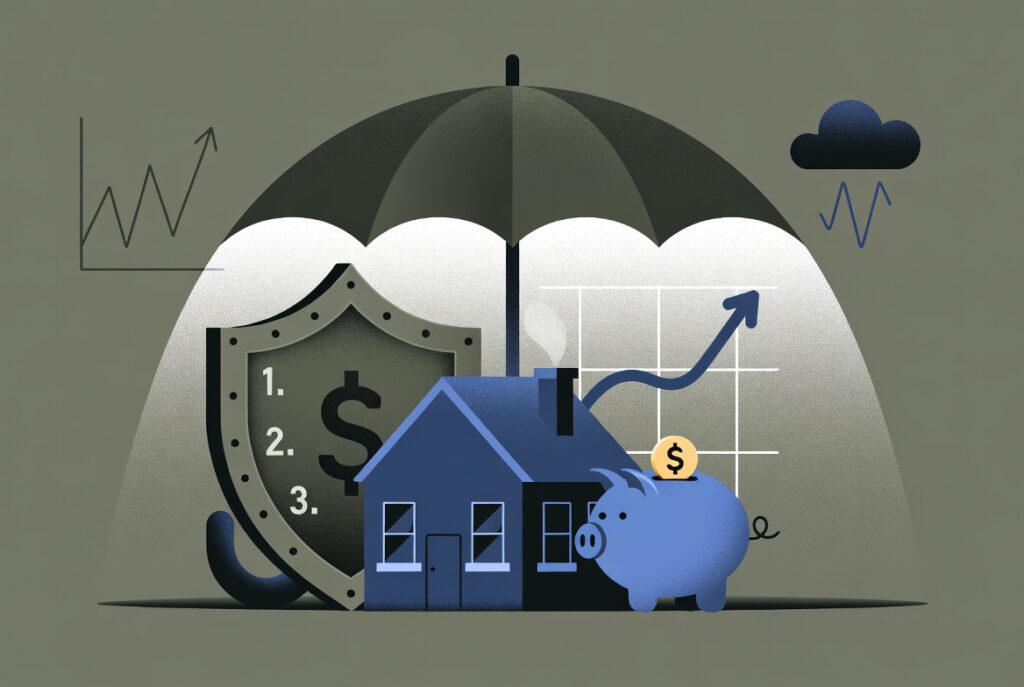
“Financial stability in uncertain times is founded on two pillars:”
Buffer: These are cash reserves that serve as a safeguard in cases where income may be interrupted.
Balance: The way you manage your money to make sure that your essential costs don’t use up all your resources.
This will allow our 3-Step Check to measure and optimize both, based on your own numbers.
Step 1: Savings Buffer Check – Your Financial Shock Absorber
This is your first and most important line of defense. A recession may mean job insecurity, reduced working hours, and loss of business. A strong savings cushion will give you the most precious commodity – time – to adjust.
The Awareness Question: “How many months of my basic living expenses can my current savings cover?”
How to Check It (Using Your Savings Buffer Gateway):
- Determine your total liquid emergency fund in savings accounts (cash).
- Compute your strict essential monthly expenses (housing, utilities, basic grocery needs, insurance).
- The amount you save should be divided by the amount of your essentials for the month.
The Insight & Action:
- If your score is less than 3 months: your objective is to create this cushion. This is where you put your extra money.
- If your target is 3-6 months: You are on solid ground. You may want to consider keeping this cushion or slightly building it toward 6 months, which gives you greater security in uncertain times.
- If your result is 6+ months: A very strong shock absorber, no doubt about it now; you can definitely focus on the next moves, balance, and opportunities ahead.
The Goal: Use your side hustle, tax return, or whatever financial gain you may have to begin building this safety net. This will be your financial airbag.
Step 2: The Expense Balance Check – Optimizing Your Cash Flow
During tough times, maximizing efficiency is important. Efficiency is all about understanding the link between income and expenses, identifying areas with room for improvement, and understanding that there is some wiggle room between income and expenses.
The Awareness Question: “What percentage of my take-home income goes to fund my essential, non-negotiable expenses?”
How to Check It (Using Your Expense Balance Gateway):
- Calculate the sum of your monthly after-tax income.
- Add up your actual monthly basic expenses (the same list as Step 1).
- Calculate: (Essential Expenses / After-Tax Income) x 100.
The Insight & Action:
- If your EsR is above 60%: Your budget is rigid. When a small reduction in income occurs, stress is generated. The priority is to look for ways to lower expenses (refinance and look for better rates and prices for things like insurance) or find ways to generate additional money.
- If your essential ratio is between 50-60%: It means that your flexibility is moderate. Identify non-essential “wants” that can be cut back instantly if required, allowing more money to be devoted to building your savings cushion from Step 1.
- If your Essential Ratio is below 50%: You are very flexible and enjoy a large amount of discretionary money. You are in a strong position and can powerfully build your buffer and investment reserves.
The Goal: The goal is to see your essential expense ratio trend down over time, creating more margin in your monthly budget. This margin is your flexibility muscle.
Step 3: The Income Security Check – Stress-Testing Your Lifelines
This last step is an active simulation. It involves your savings (Step 1) and your expenses (Step 2) in response to an important “What if. .. ” question.
The Awareness Question: “How long could I maintain my current lifestyle if my primary income source were interrupted, assuming I could use all my available cash assets?”
Checking It (Using Your Income Security Gateway):
- Try to find out what all savings you can utilize in times of need.
- Use the amount of monthly essential expenses that was arrived at in steps one and two above.
- The total available assets are divided by the monthly essentials.
Insight & Action:
This is the number that is your actual “financial runway.” It tends to be longer than your “emergency fund” savings because this number takes into consideration other savings accounts.
Such a check gives you immeasurable peace of mind. Feelings of, say, having an 8-month runway change completely your perspective upon economic news, since you are no longer reacting out of fear but from a position of informed observation.
Developing Your Action Plan: Awareness into Action
Now that you have finished the 3-Step Awareness Check, you can see your own customized dashboard. Your action plan will become crystal clear when you see your
- Strengthen Your Weakest Pillar
Is it your weak savings cushion (Step 1), your high percentage ratio of necessary expenses (Step 2), or perhaps your poor investment returns? Attack that problem first. - Minimize “Single Points of Failure.”
What about earning a small side income stream? What about reducing one high fixed expense? Inflexibility in income and fixed expenses can be disastrous. - Prioritize Liquidity.
In uncertain markets, access to ready money is paramount. Preface all investments by adding funds to savings accounts until your stockpiles are secure.
The Ultimate Goal: Anxiety to Agency
“Recession-proofing” is not a function of being fearful—it is an act of empowerment. By performing the 3-Step Awareness Check, you are turning a vague concern into a specific and doable task. From “What’s going to happen to me?” to “Here’s my plan,” that’s progress.
By moving through these gateways on a regular basis, perhaps on a quarterly basis—you will no longer have to worry about headlines. You will have a clear, data-informed view of your financial fortress.
Disclaimer: The content under this pillar is meant for educational awareness purposes only. Smart Money Gate does not provide Financial Awareness Gateways for Financial, Investment, or Professional advice. Financial decisions need to be taken after considering your own circumstances with a professional.
About the Author