For a long time, I thought emergency funds were boring.
I wasn’t reckless with money, but I also wasn’t prepared. Then came a stretch where work slowed down at the same time my car needed repairs and a medical bill showed up. Nothing dramatic—just inconvenient. Still, it was enough to make me ask a question I’d never really answered before:
How many months of expenses should I save for an emergency fund to actually feel safe?
That question ended up changing how I think about money. Not because it made me richer, but because it made things clearer. Once I knew my number, the stress eased. I stopped guessing.
What People Really Mean by “Savings Buffer”
You’ll hear a lot of terms—emergency fund, financial cushion, safety net. I usually use savings buffer, because that’s what it feels like in real life: a buffer between you and chaos.
A savings buffer is simply how long your savings could cover your basic life costs if income stopped tomorrow.
For most people, that includes:
- Rent or mortgage
- Groceries
- Utilities
- Insurance
- Minimum loan or credit card payments
- Transportation
It’s not money for upgrades or fun. It’s money that keeps the lights on while you figure things out.

Why Knowing Your Number Matters More Than Having “Some Savings”
Here’s something I’ve noticed talking to friends and clients: many people have savings, but they don’t know what it actually does for them.
That’s a problem.
When you don’t know how many months of expenses saved you have, your brain fills the gap with worst-case scenarios. Once you calculate it, the anxiety usually drops—even if the number isn’t great.
Knowing your savings buffer:
- Makes money decisions calmer
- Helps you judge risk realistically
- Turns saving into a goal instead of a guilt trip
It’s one of the simplest financial metrics, and yet most people never calculate it.
Related Tool: Gain clarity on your financial safety net in under a minute with our free, private Savings Buffer Gateway.
So… How Many Months of Expenses Should You Save for an Emergency Fund?
You’ll see a lot of blanket advice online. Some of it’s helpful, some of it isn’t.
Here’s how I think about it in real terms:
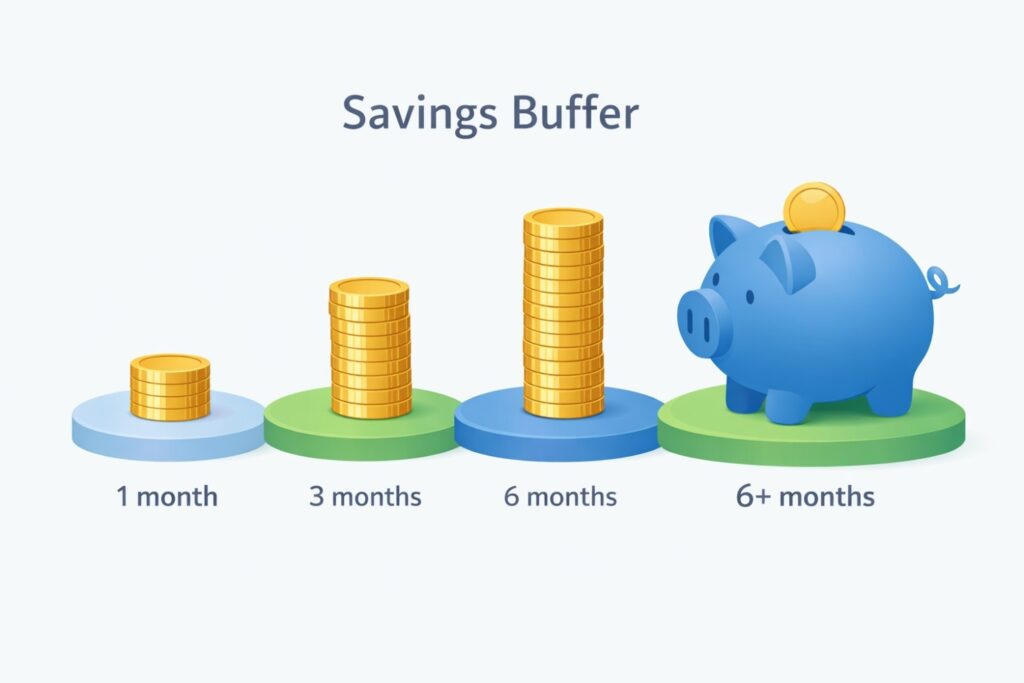
- Under 1 month: You’re exposed. One surprise can knock you off balance.
- 1–3 months: You’ve got a little breathing room, but not much margin.
- 3–6 months: This is where most people start to feel genuinely secure.
- 6+ months: You’ve bought yourself flexibility—time to think, not react.
The “right” number depends on job stability, health, dependents, and how predictable your expenses are. But the biggest mistake isn’t picking the wrong target—it’s not knowing where you’re starting from.

Why I Like the Savings Buffer Gateway (And Why I Use It)
I’m not a fan of complicated budgeting tools. Most people abandon them.
The Smart Money Gate Savings Buffer Gateway works because it’s simple and private. You enter two numbers—monthly essentials and emergency savings—and it shows you your buffer in months.
That’s it.
No accounts. No data tracking. No shame.
It’s basically an emergency fund calculator that answers the only question that really matters: How long could I get by?
👉 Find your financial clarity now: Calculate Your Personal Savings Buffer
How to Read Your Result Without Overreacting
When people see their number, they usually fall into one of two traps: panic or complacency.
Try not to do either.
A low number isn’t a failure—it’s information.
A high number doesn’t mean you’re done—it just means you’re prepared.
The goal isn’t perfection. It’s progress and awareness.

Building Emergency Savings Without Making Life Miserable
I’ve never seen someone succeed by trying to save “as much as possible” overnight.
What does work:
- Starting with a small win ($500–$1,000 changes more than you think)
- Automating transfers, even if they’re modest
- Using windfalls instead of lifestyle upgrades
- Keeping emergency savings separate from daily spending
Emergency savings grow quietly. That’s a good thing.
FAQ: Real Questions People Actually Ask
What is a savings buffer, really?
It’s how many months you could pay your essential bills using only savings.
Is an emergency fund the same thing?
Yes. Different words, same purpose.
How much emergency savings is “enough”?
For most people, three to six months of expenses strikes a realistic balance.
Should I invest my emergency fund?
In my experience, no. Emergency money needs to be boring, stable, and accessible.
How often should I check my savings buffer?
Any time your expenses change—or once or twice a year at minimum.
Final Thought: Clarity Beats Comfort
Most financial stress comes from not knowing, not from the numbers themselves.
You don’t need a perfect plan.
You don’t need extreme discipline.
You just need clarity.
👉 Calculate your savings buffer now using the Smart Money Gate Savings Buffer Gateway and give yourself something most people never have: a clear answer.
Disclaimer: This article reflects personal experience and general financial principles. It is for educational purposes only and should not be considered financial advice. Consider speaking with a qualified professional about your specific situation.
About the Author